 (Image source: Midjourney)
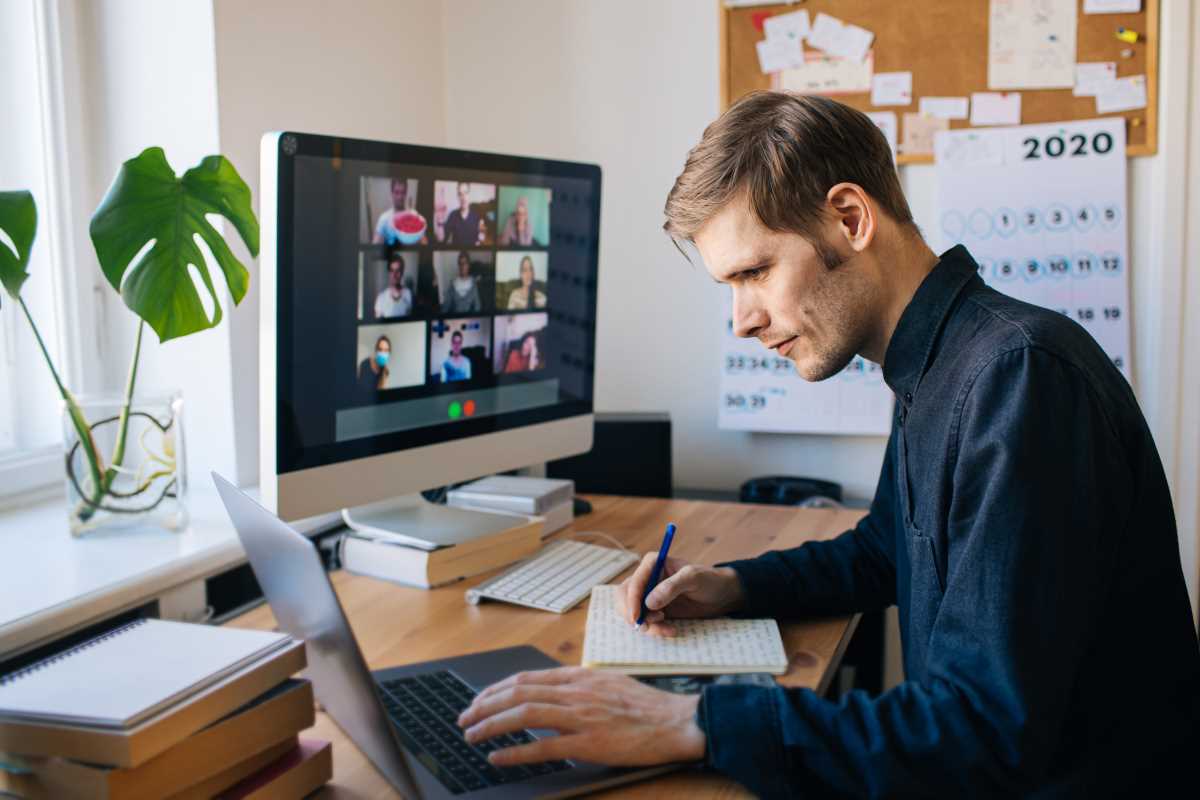
 \The way we work has changed dramatically in just a few short years. We used to have a very clear signal that the workday was over: we walked out of the office building, got into our cars or on the train, and went home. That physical separation created a mental separation. But now, with the rise of hybrid teams—where some people are in the office while others are at home, or you split your own week between the two—that line has become incredibly blurry. Your living room is now your conference room. Your kitchen table is your desk. When your laptop is sitting right there on the couch next to you, it is tempting to answer "just one more email" at 9:00 PM. This constant connectivity can lead to burnout faster than you might realize. To survive and thrive in a hybrid model, we have to stop relying on physical walls to separate work from life and start building mental ones. These "fences" are called boundaries, and they are essential for keeping your sanity and your productivity intact.
The Unique Chaos of Hybrid Work
Hybrid work offers the best of both worlds: the focus time of working from home and the collaboration of being in the office. But it also introduces a unique type of chaos. When everyone is working on different schedules and in different locations, a phenomenon called "availability anxiety" often sets in.
Because your boss can't see you typing at your desk, you might feel a pressure to prove you are working by responding to messages instantly. You might skip lunch because you are afraid that if you miss a Slack notification, people will think you are slacking off. This pressure creates an "always-on" culture where nobody ever truly disconnects.
Furthermore, without the visual cue of someone putting on their coat and leaving, colleagues might not realize you are done for the day. They might schedule a meeting at 5:30 PM because that works for them, not realizing it cuts into your family dinner time. This mismatch of expectations is the root cause of most hybrid friction.
Technique 1: Create a "Digital Commute"
One of the biggest losses in the shift to remote work was the commute. While nobody misses traffic jams, that time in the car or on the bus served an important psychological purpose. It was a buffer zone that allowed your brain to switch from "home mode" to "work mode" and back again.
You need to recreate this boundary artificially. We call it a "digital commute." This is a ritual you perform at the start and end of your workday to signal to your brain that a shift is happening.
- The Morning Commute: It could be a twenty-minute walk around the block before you sit down at your computer. It could be making a specific type of coffee while listening to a podcast. The key is consistency.
- The Evening Commute: When the day is done, close your laptop and physically put it away in a drawer or a bag. Change out of your "work clothes" (even if that just means changing from a nice shirt to a t-shirt). Go for another walk or do a quick workout.
This ritual helps you leave the stress of the workday behind so you can be fully present for your evening, rather than letting work thoughts linger.
Technique 2: Master Asynchronous Communication
In a traditional office, communication was often synchronous—meaning it happened in real-time. You walked over to someone's desk and asked a question, and they answered immediately. In a hybrid team, relying on synchronous communication is a disaster. It forces everyone to be glued to their screens all day, interrupting deep work.
The boundary here is establishing that not everything needs an instant response. This is "asynchronous" communication. It means I send a message when it suits me, and you answer when it suits you.
Scenario: Sarah is a writer who needs deep focus to draft articles. Her manager, Mike, often has random ideas throughout the day. If Mike expects Sarah to answer his Slack messages instantly, Sarah will never get any writing done.
The Fix: Sarah sets a boundary. She checks messages at 9:00 AM, 1:00 PM, and 4:00 PM. Her status update says, "In deep focus mode. Will reply to messages at 1:00 PM." Mike learns that he can send the message, but he shouldn't expect an answer until her designated window. This frees Sarah to work without guilt.
Technique 3: The "Scheduled Send" Is Your Best Friend
Hybrid teams often span different time zones or simply different working styles. Some people start at 7:00 AM to finish early for school pickup. Others start at 10:00 AM and work late.
A major boundary violation happens when the "late worker" sends emails to the "early bird" at 10:00 PM. Even if the sender doesn't expect a reply, the recipient sees the notification on their phone and instantly feels stress. Their cortisol spikes right before bed.
To respect boundaries, teams should heavily use the "Schedule Send" feature found in almost every email and chat platform. If you are working late and finish a project at 9:30 PM, schedule the email to go out at 8:00 AM the next morning. This gets the task off your plate without invading your colleague's personal time. It sends a powerful message that you respect their right to disconnect.
Technique 4: Defining "In-Office" vs. "Remote" Tasks
Another boundary involves how you use your time in different locations. A common frustration is commuting an hour to the office, only to spend the entire day on Zoom calls with noise-canceling headphones on. That defeats the purpose of being there and feels like a waste of time.
You need to set boundaries around what tasks belong where.
- Home Days: These are for deep focus, writing, administrative tasks, and calls that require privacy. Block your calendar on these days to prevent unnecessary interruptions.
- Office Days: These are for collaboration, brainstorming, and social connection. Set a boundary that you will try to avoid solo work on these days.
Scenario: A marketing team decides that Tuesdays are their "Office Day." They agree that no Zoom meetings are allowed on Tuesdays. Instead, they use that time for whiteboard sessions, lunch together, and face-to-face problem solving. This ensures the commute is worth it and protects their home days for execution.
Technique 5: Visual and Physical Signals
When working from home, family members or roommates can be a major source of interruption. They see you sitting there and assume you are available to chat or take out the trash.
You need clear physical boundaries. Ideally, this is a separate room with a door you can close. When the door is shut, it means "Do Not Disturb." If you don't have a separate room, you can use other signals. Some people use a specific lamp on their desk—when the light is on, they are working. Others put on large over-ear headphones as a visual "stop sign."
You also need physical boundaries for yourself. Avoid working from your bed or the living room couch if possible. If you work in your relaxation spaces, your brain will eventually associate those spaces with stress, making it harder to fall asleep or unwind.
Technique 6: The "Team Charter"
Boundaries are hard to enforce if nobody knows what they are. The most effective hybrid teams sit down and write a "Team Charter" or a working agreement. This document explicitly spells out the rules of engagement.
It should answer questions like:
- What are our core collaboration hours (when everyone must be online)?
- What is the expected response time for an email vs. a chat message? (e.g., Email = 24 hours, Chat = 4 hours).
- How do we signal that we are offline?
- Are there "meeting-free" days?
Having this written down removes the guesswork. It gives permission for people to disconnect without fear. If the charter says, "We do not expect email replies on weekends," then nobody feels guilty for ignoring their inbox on Saturday.
All articles published on Baxiti.com are created for informational and editorial purposes only. Readers are encouraged to verify details directly with official job and legal sources before making decisions. Baxiti.com is not affiliated with, endorsed by, or officially connected to any company, brand, or legal authority unless explicitly stated.